


In 2026, the gap between AI leaders and AI laggards in banking won’t be measured by model accuracy. It will be measured by how fast a bank can activate trusted data at the moment of decision.
Banks have reached a point where AI is no longer optional; it is the engine behind:
- Instant lending
- Real-time fraud defense
- Hyper-personalized banking
- Automated compliance
- Reduced operating cost
But while investment in AI has exploded, ROI hasn’t matched the hype. And the reason is becoming impossible to ignore:
The models are fine. The data is not.
The Hidden Obstacle to AI Scale: Fragmented Banking Data
Despite having some of the richest datasets in any industry, banks still operate with data locked inside decades of system sprawl:
- Core systems
- Payments and settlements
- CRM and digital channels
- KYC/AML platforms
- Credit bureaus
- Partner ecosystems
These silos prevent AI from seeing the full customer or the full risk picture. That’s why 70–80% of GenAI initiatives stall before scaling (industry-wide trend).
In 2026, competitive advantage won’t come from new algorithms;
it will come from real-time, unified, governed signals.
Prediction #1: Agentic AI Will Become the New Operating Layer of the Bank
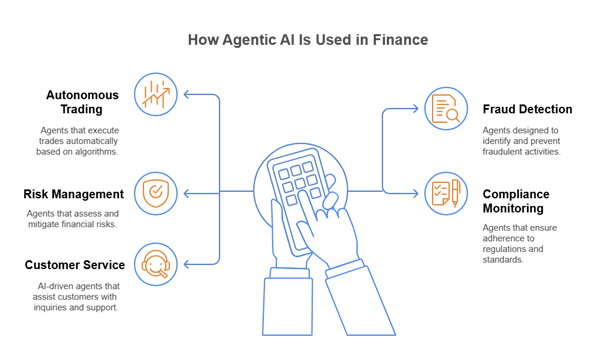
Banks are moving beyond AI that explains into AI that acts. By 2026, major institutions will deploy fleets of Agentic AI systems:
- Fraud Agents rejecting transactions or escalating risk
- Underwriting Agents issuing instant credit decisions
- Compliance Agents autonomously enforcing policies
- Personalization Agents tailoring offers in real time
These agents only function if they’re fed the right data:
- Live customer behavior
- Transactional context
- Risk events
- External credit and payment signals
- Governed access policies
Agentic AI is only as strong as the data layer that supports it.
Prediction #2: Data Products Will Replace Monolithic Warehouses for AI Workloads
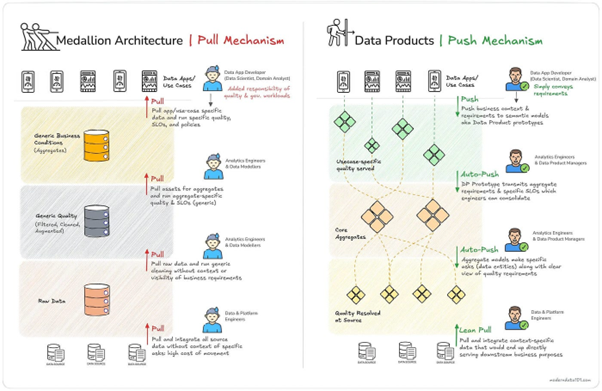
Data products will become the de facto architectural standard in banking because they:
- Encapsulate trust
- Facilitate data governance
- Expose data as reusable assets
- Power AI agents and agentic workflows
A modern banking data product hierarchy looks like this:
- Bronze: unified customer, core, and payments
- Silver: risk, fraud, compliance, lending intelligence
- Gold: underwriting, fraud actioning, personalisation workflows
The shift is profound: Banks stop moving data to AI; AI comes to the data.
This reduces latency, cost, and regulatory exposure while dramatically improving AI performance.
Prediction #3: Real-Time Signals Will Become the #1 Driver of Financial Outcomes
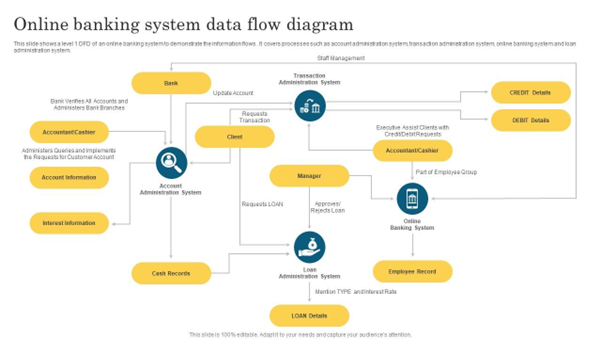
Banks measure AI success through hard KPIs:
- Lower losses
- Reduced fraud
- Faster credit turnaround
- Higher wallet-share
- Lower cost-to-serve
- Stronger compliance posture
Every one of these outcomes depends on a single capability:
A real-time, unified understanding of the customer at the exact moment of decision.
Batch systems can’t deliver that.
Traditional extract, transform, and load (ETL) pipelines can’t deliver that.
Legacy master data management (MDM) solutions can’t deliver that.
2026 will be the breaking point when real-time is no longer a differentiator – it’s the minimum requirement.
Prediction #4: Semantic Layers Will Become Mandatory for AI Governance
As banks deploy dozens of AI models, copilots, agents, and decision systems, governance becomes impossible without a unifying layer.
A semantic layer will become the essential control plane for:
- Shared definitions
- Lineage
- Trust
- Policy enforcement
- Model transparency
- Auditability
- Cross-agent consistency
This layer is what enables every agent to be working with the same truth.
Prediction #5: Banking Winners Will Be the Ones Who Activate Data the Quickest
By 2026, industry leaders will share a common characteristic:
They will operate at the speed of signal.
Those institutions will achieve:
- Dramatic reductions in risk
- Real-time fraud prevention
- Automated compliance
- Instant lending
- Personalized engagement at scale
- Higher customer retention
AI is no longer an innovation sandbox. It is the revenue engine of the bank.
And only banks with real-time, governed data foundations will capture its full economic impact.
Why Denodo Sits at the Center of the 2026 Banking Architecture
Banks are turning to Denodo because it provides the missing layer required to operationalize AI safely and at scale:
- Logical access across core banking, payments, CRM, risk, and external sources
- Governed delivery of data to AI agents and applications
- Real-time activation of transient signals
- Zero-migration data products built on existing systems
- A universal semantic layer that standardizes meaning across the bank
Denodo enables banks to adopt next-generation AI architectures without having to rip out legacy infrastructure.
It doesn’t replace systems – it orchestrates them.
Final Takeaway: 2026 Will Be the Year Banks Compete on Data Activation, Not Data Volume
The winners won’t be the banks with the most data. They’ll be the ones that transform data into action — instantly, safely, and at scale.
2026 marks the start of a new competitive reality:
- Real-time signals define performance
- Agentic AI defines operations
- Semantic layers define governance
- Data products define architecture
This is the shift from risk management to revenue acceleration. And it begins with building the right data foundation today.

- Insurance Predictions for 2026: The Year AI Becomes the Operating System of the Industry - January 13, 2026
- 2026 Banking Predictions: From Risk to Revenue – Why Banks Are Re-Architecting AI around Real-Time Signals - January 5, 2026
- Modernising SAP at the Speed of Business and Powered by Denodo and Microsoft Azure - October 30, 2025